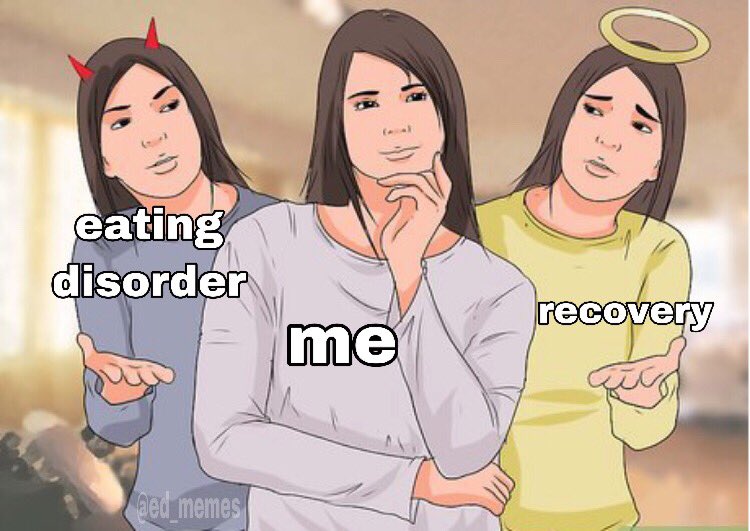
 It's been a while once again since I posted, but I felt this was relevant. I want to talk about relapse. I know this quarantine hasn't been fun for anyone. I know it has been especially tough for people that struggle with eating disorders. Quarantine has brought on relapse for many people, including myself. I'm embarrassed to say it. But I've relapsed. The signs started to show when I was on my own for a lot of meals in England. I wouldn't finish all of it or maybe I would miss breakfast once a week. I also didn't have a care team in place. Things got nasty when I had to come home from my study abroad and suddenly I was with my thoughts for most of the day. I gave my eating disorder space to breathe, let her come back into my life. Come back, she did. She came back in full force and wrecked my mental health. Now I'm going back to residential. I'm both upset and glad I reached out for help. I don't really want to get better, but I know life is better when I'm in recovery.
This isn't all about me though, I want to try to make things educational. So here are some warning signs someone is slipping into relapse:
- Therapy/nutrition sessions have stopped
- Exercise has become a necessity
- Foods are being labeled as good or bad
- Wants to eat alone/avoids eating out
- Becomes more closed off and avoids feeling emotions
- Rigid eating patterns
- Perfectionistic attitudes
- Relying on external compliments for validation
These are just a few examples of course. But look at yourself if you've struggled with an eating disorder. Are you doing any of these things? Maybe it's time to reach out and get help. If you notice a loved one doing these things make sure you're there to support them.

